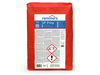
WTA-compliant preparatory mortar
Remediation in the event of mould infestation
Remediation in case of mould infestation?! We get it done!
Mould contamination is one of the most common health risks in living and working environments. It is often caused by excessive humidity, low surface temperatures or moisture in building components. Wall areas with thermal bridges are particularly at risk, as this is where surface temperatures are lowest.
To prevent mould growth, minimum hygienic thermal insulation is crucial: the surface temperature should be at least 12.6 °C and the relative humidity on the wall should not exceed 70%. Common reasons for increased humidity are incorrect or insufficient ventilation, undersized ventilation options or high moisture output in the room.
If mould growth occurs despite preventive measures, professional, sustainable and effective remediation is necessary to thoroughly treat the affected areas and protect them in the long term.
SP Top SL – Capillary-active climate control render
SP Top SL supports the drying out of damp walls and at the same time prevents mould growth. Thanks to its special properties, the material can absorb moisture, store it and release it again in a controlled manner. This increases surface temperatures, reduces relative humidity and significantly reduces the conditions for mould spores.
The combination of moisture absorption and water storage ensures that even in unfavourable climatic conditions, condensation is reliably removed and microorganisms do not stand a chance. At the same time, SP Top SL has a slight heat-insulating effect, thus contributing to an improvement in the indoor climate.
With its high porosity and optimal water release during ventilation, SP Top SL is the ideal solution for refurbishing damp or mould-prone walls – and at the same time contributes to improving the energetic performance of your outer walls.

System data sheet
Find the corresponding system data sheet to this solution now!